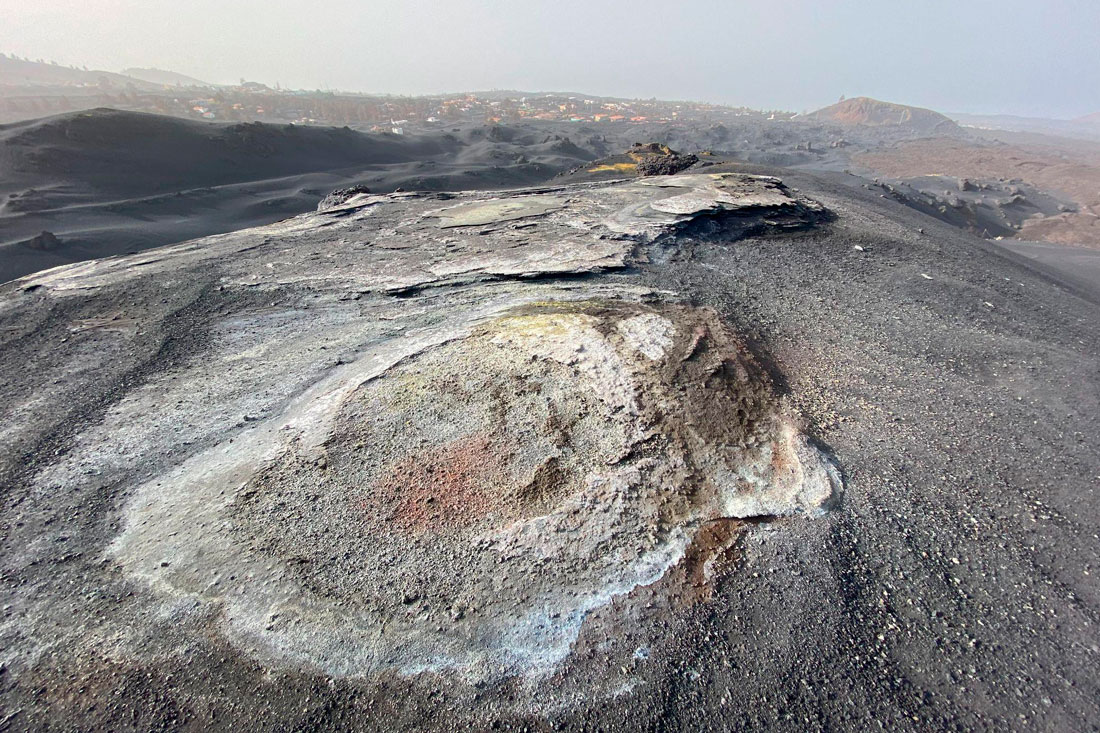
The Tajogaite volcano in 2021 is included in the Spanish Inventory of Sites of Geological Interest (IELIG, acronym in Spanish). This eruption has expanded the frontier of knowledge, especially in the discipline of geological heritage, allowing research into the generation of a unique geological heritage and its implications in recognition, legislation, and new land-use planning. This fact has meant one of the great challenges for scientists, administrations, and society: to recognise the volcanic elements of greatest scientific value, to propose them for legal protection, and to obtain the recognition of society in ensuring their effective and guaranteed protection.
We cannot forget the contribution of education in this process and how this eruption has allowed us to improve educational content in both formal and informal education. Administrations must take into account that environmental education is key in the grieving and overcoming process of the affected population. Training in geohazards and nature conservation is vital for the population to be more resilient to future eruptions.
For this scientific session, we invite all contributions on Geoheritage around the new eruption, inventories, mapping, applications to land use planning, geoconservation, sustainable development, education, new technologies, outreach, and geotourism.