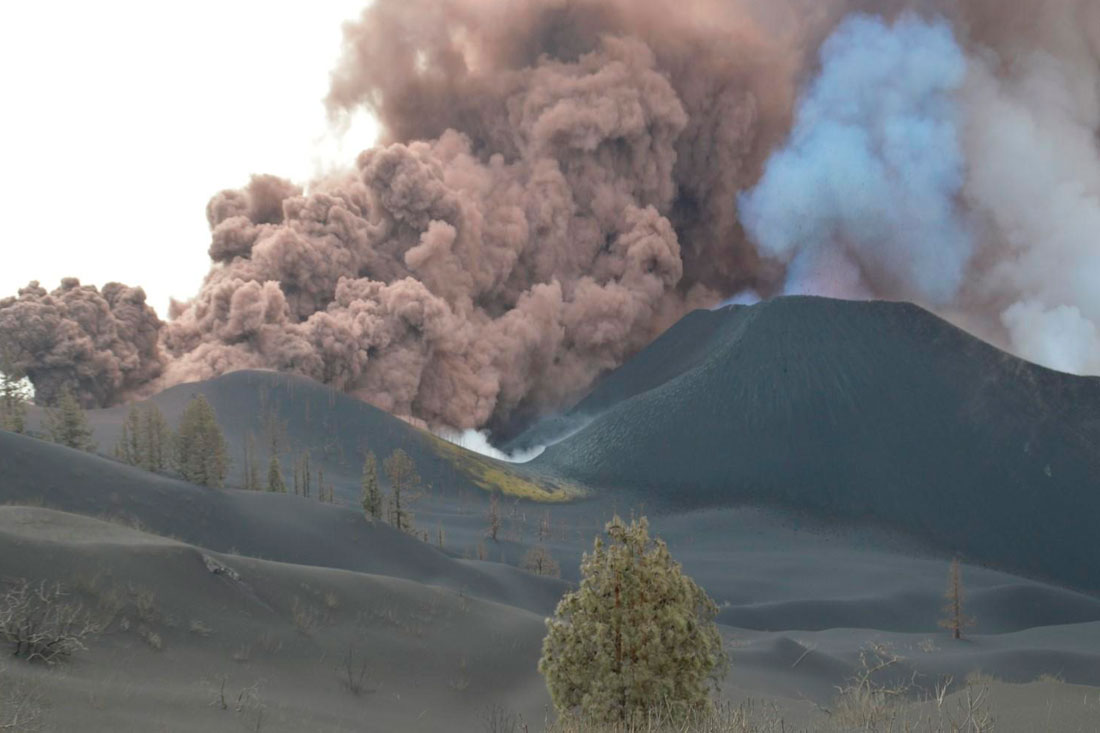
This session will focus on participants showing us how, using various petrological and geochemical methods, we can learn about aspects related to the origin and evolution (pressure and temperature conditions of formation and ascent of magmas, composition and concentration of volatiles, study of magma mixing and contamination phenomena, etc.) of the magma involved in volcanic eruptions, with special emphasis on the La Palma eruption of 2021. These methods include:
Isotopic studies of the rocks and minerals generated in the eruption, in order to establish origins and possible processes of mixing and contamination of the magmas.
Studies of mineral chemistry and use of geothermometers and geobarometers.
Analysis of fluid and molten inclusions contained in the minerals formed in the eruption.
Simulations by means of experimental petrology of the origin and evolution of the magmas involved in the eruptions.
Studies of elemental geochemistry of the rocks produced in the eruptions.