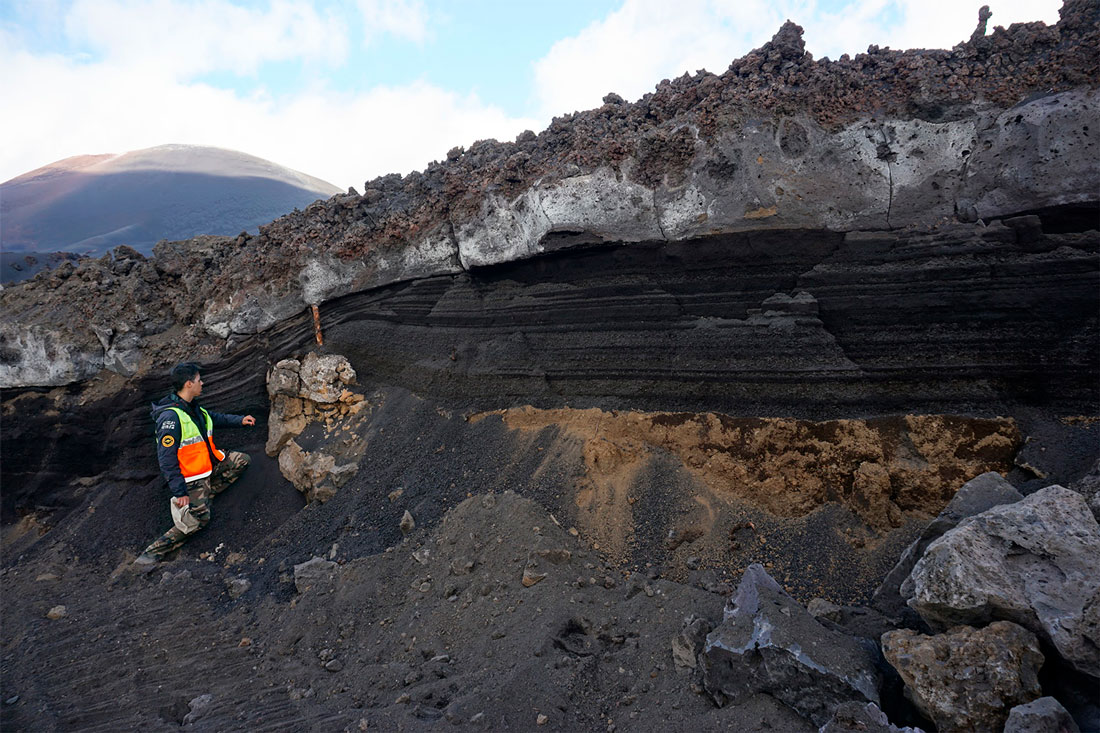
The Tajogaite eruption was a multi-vent eruption displaying different eruptive phases (Hawaiian, Strombolian, violent Strombolian, and Phreatomagmatic). Along the eruptive fissure, the vents exhibited varied behaviors, emitting different volcanic products over time. The cone grew and partially collapsed, altering the eruptive dynamics. Lava flows were issued from multiple vents, reaching the coast in some instances and forming lava deltas, where explosive events occurred due to lava-seawater interaction. These and other processes were observed daily in the field by scientists and recorded by drones and TV cameras documenting the eruption.
Field descriptions, sampling, and mapping of the Tajogaite volcanic deposits, along with the modeling of the physical processes, will provide new insights into the physical volcanology of mafic fissure eruptions. This session aims to share insights into the volcanic processes observed during the Tajogaite eruption, such as tephra dispersion, lava flows, volcanic tubes, lava deltas, and debris avalanches. We invite contributors to discuss fieldwork observations of the volcanic processes and their associated deposits, field mapping, and modeling. Contributions exploring advances in interpreting past eruptions based on this new knowledge are also encouraged.